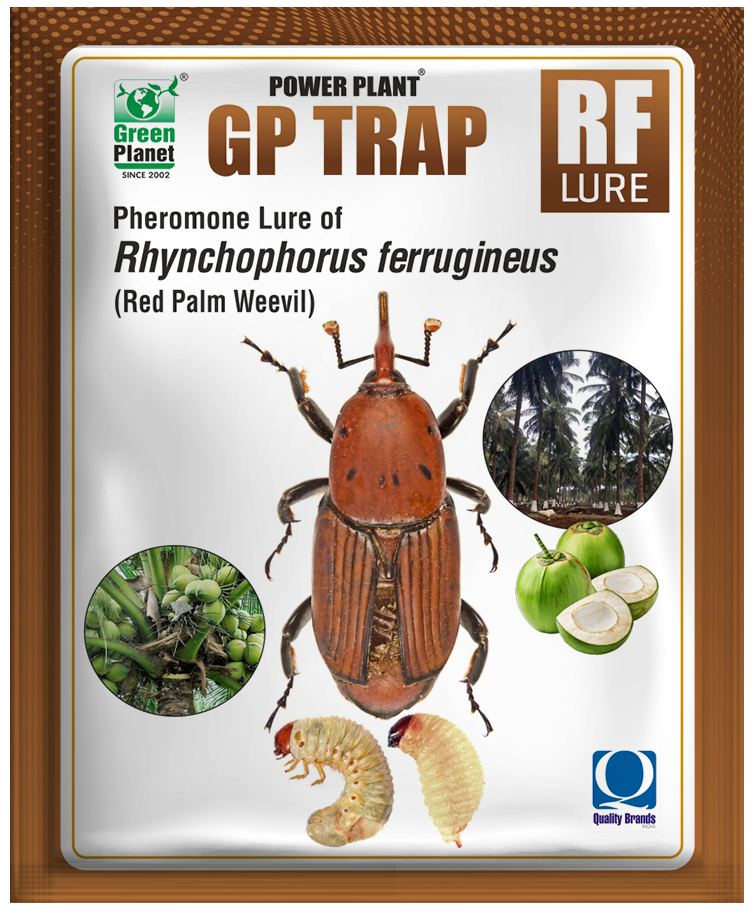
This pack contains one pheromone lure of Rhynchophorus ferrugineus (Red Palm Weevil), designed for use in bucket traps for effective monitoring and management of this destructive pest in coconut plantations. The lure attracts adult weevils into the trap, helping farmers detect infestation early and reduce pest population through mass trapping.
Identification of insect
The eggs of red palm weevil are oval-shaped and creamy white, usually laid in small cavities, wounds, or cuts on the trunk. The larvae are light yellow, legless (apodous), thick, and fleshy with a conical body that is broader in the middle and tapers towards the ends. Full-grown larvae pupate inside the stem by forming a fibrous cocoon made from plant fibers. The adult weevil is reddish-brown with six dark spots on the thorax. Males can be identified by their long snout with a tuft of hairs.
Life Cycle of insect
The female weevil lays around 200 eggs at the base of young leaves or in damaged plant tissues. Eggs hatch into white, legless larvae that feed on soft plant tissues and tunnel inside the trunk for about one month. The larvae can grow up to 6–7 cm in length. After feeding, they pupate in a fibrous cocoon, usually at the base of the tree. The complete life cycle is completed in approximately 7–10 weeks. Adult weevils are strong fliers and can travel long distances, attacking both weak and healthy palms.
Nature of Damage
Infested plants show visible holes on the trunk with chewed fibers protruding out. In many cases, reddish-brown fluid may ooze from these holes. The larvae cause severe internal damage by feeding on soft tissues of the stem and crown. In heavy infestation, the entire inner trunk may become hollow and filled with rotting fibers. In young palms, the top portion dries and wilts, while in older palms, the trunk may bend and eventually break. Sometimes, feeding sounds from inside the trunk can be heard. Advanced infestation leads to yellowing of inner leaves and severe plant decline.
Target Crop
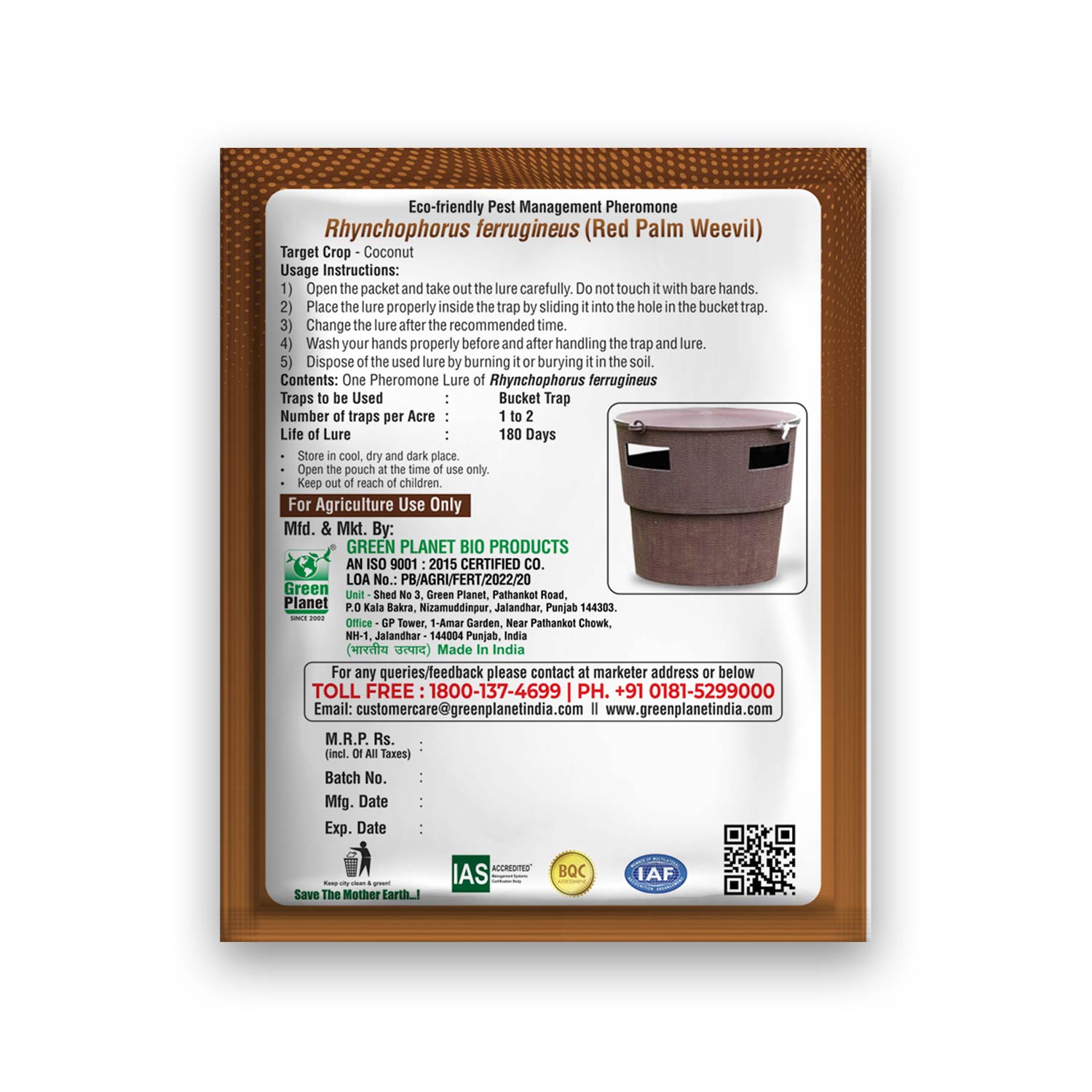
Usage Instructions
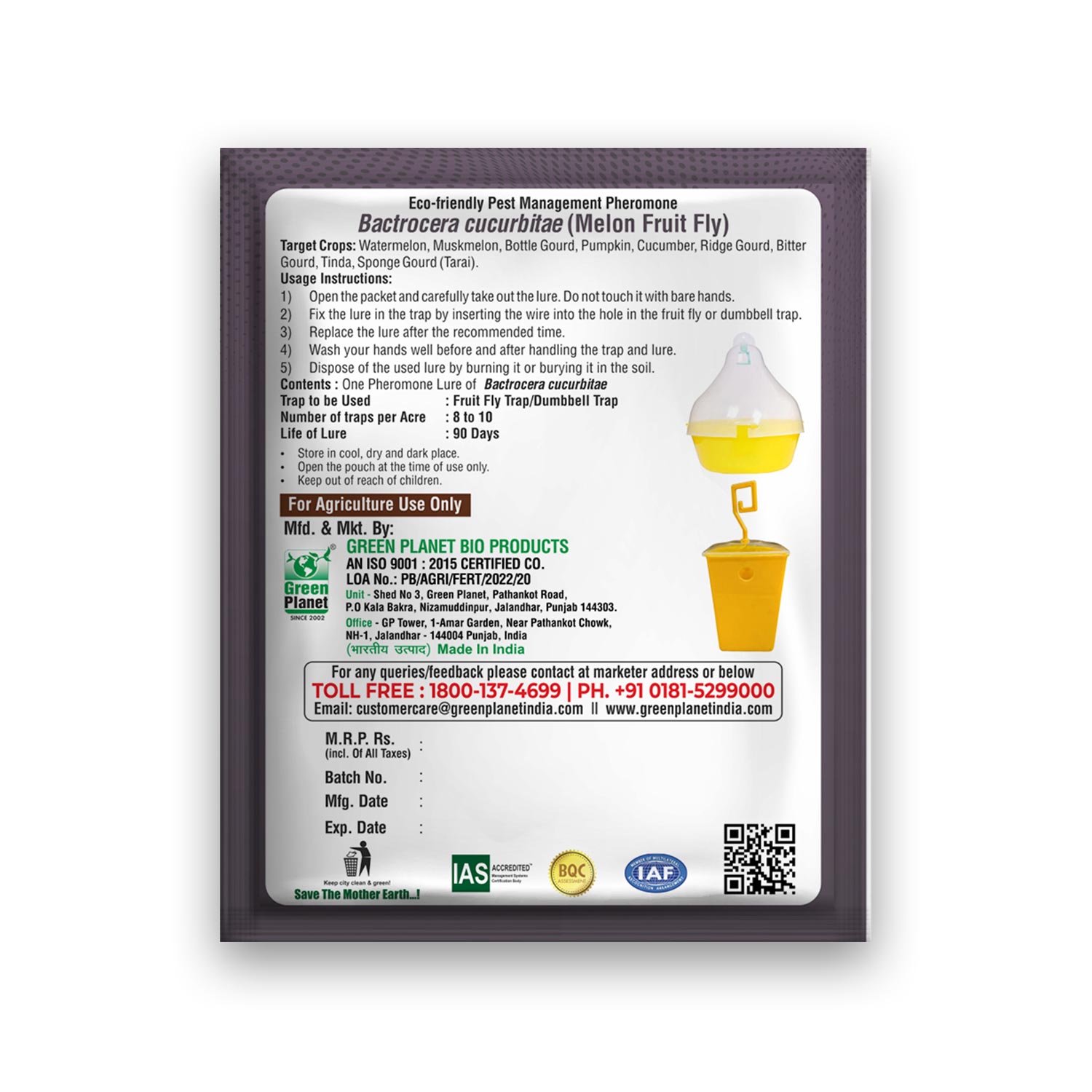
- Open the pack carefully and remove the pheromone lure
- Do not touch the lure with bare hands to avoid contamination
- Fix the lure properly in the bucket trap using the provided slot
- Place traps as per recommended guidelines in the field
- Replace the lure after its effective duration
- Wash hands thoroughly before and after handling
- Dispose of used lure safely by burning or burying underground
?? Application Details
- Trap Type: Bucket Trap
- Trap Density: 1–2 traps per acre
- Lure Life: Up to 180 days
Key Benefits
- Early detection of red palm weevil infestation
- Helps in reducing pest population through trapping
- Supports Integrated Pest Management (IPM)
- Easy to use and maintain
- Eco-friendly and safe for crops